SHOW NOTES
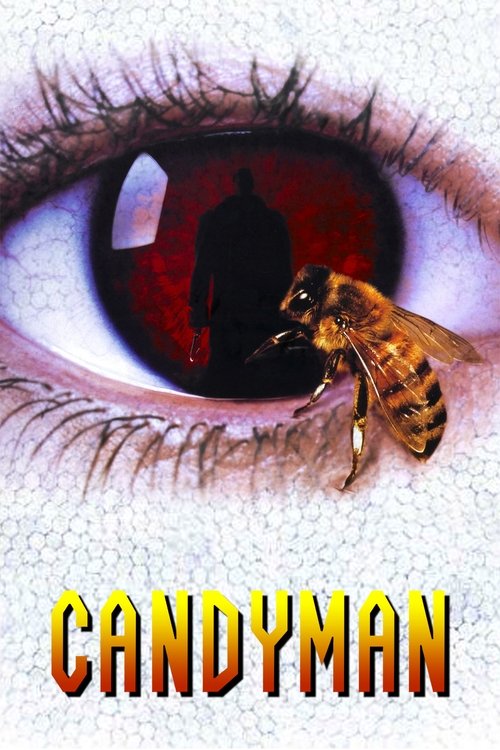
Say his name five times if you dare 🐝 We're diving into the 1992 original Candyman and the enduring power of its urban legend.
FULL TRANSCRIPTtap to read →
Hey everyone! Before we get started, I wanted to say that I love this film and have been so excited to cover it. But as you may know, this podcast is hosted by three white people. Before or even instead of listening to our episode, I hope you seek out discussions of Candyman from diverse voices, a few of which I have linked in our show notes and in posts on social media for you to check out. This episode had been programmed long before the current outcry for racial justice, and sadly before I understood the severity of the state of oppression we've been living in for so long. However, I thought we'd be remiss to cancel what I hope is a productive conversation.
In this episode, we will be focusing on white privilege. We will not be imposing our voice and opinions on the African American community's relationship to this complicated film. Please find resources for how you can help fight for racial equality and the Black Lives Matter movement in the show notes. If you enjoy this episode, and even if you don't, please donate to these great organizations amplifying black voices. Hello, Sydney. Uh hi, who is this? It's your killer host! My name is Parker, your resident horror fanatic. I'm Caroline, Scaredy Scream Queen. I'm Ian, Scary Movie Skeptic. And welcome to. What's your favorite scary movie? What's your favorite scary movie is a horror film podcast where we're on a journey to find our favorite scary movie one at a time.
Whether you hate them or love them, join us and discover yours. Spoilers ahead, so plan your movie screening every weekend before the episode release. Hey guys. Oh my god, hey Parker. How are you? I'm so good. How are you guys? It's so funny bumping into you here. Yeah, what a coinky ding. This week, you know what I'm feeling? Some sweets? Yeah. Got a bit of a sweet tooth this week. And there's only one thing that can quench that thirst. Sweethearts. Mmm. Close. Chocolate. Close. Snickers. Twix. Blood. Ooh. Yes, all of the above, plus a little candy, and maybe a little man. Ooh, I hear a little Christina Aguilera in the background. Sweet sugar candy man. Well, this week we indeed are going to be slashing into the classic Candyman.
And do you know why we're looking at the classic Candyman this week? Why? Because this weekend, the coming weekend, the new 2020 Candyman has been ripped out of our hands and is now scheduled to come out in the fall. But I thought I will dream. So, in honor of Candyman 2020, we are going to be looking at the original to scratch our itch for a little candyman. Candyman came out when I was negative three years old in 1992. Negative one years old. Same. A couple of youngins. Candyman was written and directed by Bernard Rose. He also directed Paper House from 1988 and Immortal Beloved from 1994. The movie was based on the short story The Forbidden by Clive Barker from his Books of Blood.
And you can go hear more about Clive Barker in our episode on Hellraiser, where we talk about all things queer, gay, monstrous, because Clive Barker is a famous queer horror writer. So, yeah, happy pride. It is just enveloping, engrossing, immersive. I love it. It's beautiful. Philip Glass. Uh yeah, just a small name there. I did notice, I mean, I just watched it on my laptop. And the music was still pretty. Freaking great. We have Virginia Madsen who plays Helen Lyle. Why you gotta say it like that? Helen Lyle? Helen Lyle. Uh she was in Dune in nineteen eighty-four, The Haunting in nineteen ninety-nine, and the recent Swamp Thing TV show. I just the whole time I was thinking, She's beautiful, why isn't she in more?
Yeah, yeah, and this movie really has a thing for those big bug eyes of hers. Oh, I thought you were gonna say nipples. She's got some big bug boobies too. Yeah. There were yeah, there were a couple moments where I was like, hello. Alright, we have Xander Berkeley who plays Trevor Lyle. He was in Terminator 2 in 1991 and Air Force One in 1997, which, fun fact, I used to love that movie. What movie? Air Force One. No, I've never seen it. It's a great movie. Great movie. We should watch that again. Yeah, we should. It's a great movie. That's one of those movies that like comes on TV on Sunday evenings and you just like sit down and watch it with your dad, you know?
Yeah, we should watch it tomorrow. Uh we also have Casey Lemons who plays Bernie Walsh. Uh she was in The Silence of the Lambs in 1991. Vanessa Williams plays the role of Anne Marie McCoy. She was in or she's currently on Days of Our Lives. Good for her. Which is that still running? I feel like we've talked about this before. Yeah, we've had we none of us are knowledgeable of soap operas. Days of Our Lives. She's also reprising her Candyman role in the new 2020 film, which is exciting. Ah, Vanessa. Good for you. Uh Tony Todd has the titular character of Candyman. Oh. Sweets to the sweet baby. What an icon. He was very much so a successful actor before Candyman.
Uh, but Candyman obviously just made him a legend. He's, as Parker would say, in practically every movie you've ever seen. Oh, it's like I did say that. Yeah. He returned for the Candyman sequels. He was in the Final Destination franchise, um, in the remake of The Knight of the Living Dead from 1990. Wishmaster, Hatchet, Hellfest, The Scream TV show. IMDB lists 123 horror titles in his filmography. Wow. And he and wait, bonus, it's not over yet. He has 17 upcoming projects listed as well. This guy's making money. Well, I've got a little gos for you, too, because he's in the upcoming Candyman movie. Of course, what would it be without him? But it is a little unclear specifically to what extent, because he is listed on IMDB by Candyman's name, Daniel Robotal, but he's not listed as Candyman.
And in the trailer, we see the main character of the new film kind of becoming Candyman. So I'm just curious to see how much Tony Todd will be seeing in the new film. Ah, so you think they split it, like old Candyman and current? Yeah, maybe there's some sort of new rebirthed Candyman. Hmm. Intriguing. And then another piece of trickery for you on that same Candyman 2020 IMDB page, an actress named Cassie Kramer is listed as, quote, librarian. It has been confirmed, and perhaps this is a spoiler, I do not know because I have not seen the film, but it has been confirmed that she is performing the role of Helen Lyle. Hmm. So I'm not quite sure.
It does not appear that Virginia Madsen will be in the new movie. A Rotten Tomato Summary is, quote, researching urban folklore, a University of Chicago student snoops around the housing projects of Cabrini Green to find more about the legend of Candyman, who supposedly appears whenever one looks into the mirror and repeats his name five times, to slash his victims with a metal hook. Beautiful reading. The Rotten Tomatoes critic score is seventy-four seven four per cent. Wow. The audience score is sixty-one per cent. Six one percent. The uh and the critics consensus is quote, though it ultimately sacrifices some mystery in the name of gory thrills, Candyman is a nuanced, effectively chilling tale that benefits from an interesting premise and some fine performances.
That was riveting Ian. It is roasting in my room right now because I had to turn off the fan, and just that slow pace is crushing it for me. So, as I mentioned earlier, there are two sequels to Candyman. There is Candyman, Farewell to the Flesh from 1994, and Candyman, Day of the Dead from 1999. I recently watched Farewell to the Flesh, and it was like not the worst thing I've ever seen. It just was not remarkable to me. And I thought, you know what? I do not need to see the third one. I have all the information I need right now from the sequel. So maybe the third one is the best movie I would have ever seen.
I'll never know. Can I ask you guys a question? Yeah. So we watched this last night before we went to bed. And I went upstairs to brush my teeth in the bathroom. And I had an inkling. You did not. I wanted to, but I didn't. Just in case. Did you guys think about it? Did you guys think about it? When you I did. Yeah? See, I've never even thought to do it, because why would I invite that into my life? I wasn't thinking of doing it, but I was thinking of the concept of doing it when I was in the mirror. Yeah, I was brushing my teeth and I was like, maybe I should. And then I didn't.
Because it's like so ridiculous, but what if you did it and then like on the off chance, like he showed up? I feel like this is I remember hearing about this folklore. There's always been this folklore. It was like Bloody Mary or whatever. Right, right, right. But I I remember hearing about Candyman specifically, like at a slumber party when I was little. Yeah, and that's something that I think is really uh interesting about this film is that well, and actually the original Candyman from Clive Barker's short story was, like Ian said, based off of Bloody Mary and another urban legend that we actually discussed, I'm pretty sure, on our I Know What You Did Last Summer episode about the hook man, who you know, crazy man who escapes from an asylum with a hook for a hand, those were combined to make Candyman.
But I feel like Candyman himself has kind of since the film developed his own urban legend that, like we discussed with Texas Chainsaw Massacre, developed a reputation that even if you haven't seen Candyman, you've at least heard the name. I had never heard of it until now. Now that you have heard of it, what would you say is your first reaction to Candyman? Well, first off, I really enjoyed this movie. I like sat down to watch it and I was like, hmm, I don't know if I'm gonna like this or not. I had watched like five minutes of this movie when Parker was watching it one time and I just sat down on the couch with him.
So I already had like kind of an image in my head. But this thing kept me engaged start to finish. I really enjoyed the acting performances by everyone. I thought the story was fun and like not overly corny with like jump scares or anything like that. The only thing that I wish they would have dug into a little bit more was the history behind it. I'm a sucker for that. Like we get a little glimpse of it, but I still like couldn't fully connect all the puzzle pieces. Like the backstory of Candyman or like a larger history. Yeah, the backstory of Candyman, and like, you know, there's there were obviously there's history of this legend being passed down for a long time, but it just kind of like you hear the story of like the man, and then all of a sudden you're in present day.
So like, you know, how did he did he do the same thing with Helen that he like with other people to keep his legend alive? Like what was it just kind of like jumped really quickly for me. Yeah, and I think something that to me pulls me in about this movie is that it doesn't give you questi or it doesn't give you answers to those questions. I like that it kind of gives you context to make your own answers, and so it's kind of like we can sit here and talk back and forth about maybe Helen was re-in is like the reincarnation of the woman that he loved a long time ago. Or maybe he's done this, or maybe there's this reason that he was killed, and it kind of goes into his backstory more, actually, not kind of, it does go into his backstory a lot more in the sequel, but in a way that I was not pleased with, I thought it kind of disrupted the thread of the first movie.
And so I guess maybe having seen the sequel, I like more of the ambiguous uh story here because ultimately we don't know really why he's doing what he's doing, besides that he says he has to keep killing to keep his memory, his legend alive. Ultimately, start to finish, I was pleased with it. I just so pleased that I wanted more. Ooh, Ian, what did you think? I mean, I'm uh I feel like one of my favorite eras of movies are the 90s, so I I think it was like a classic 90s movie. Some great fashion. Mm-hmm. Yeah, I really enjoy, I don't know, there's almost like a a grungy rawness to 90s movies that I really enjoy.
So I really enjoyed that aspect of it. I also enjoyed, to your point, I think the movie lends itself really well to making your own interpretations of the movie. I got a little bit tired at the end of the movie. So, you know, that's the barometer sometimes on how engaged I am. But I really did enjoy a lot of the aspects, especially at the beginning in the middle, but the ending was kind of started to get me kind of bored, I guess. But I will say, I think you guys are assuming that Candyman's a th a person or a thing. I'm making no claims yet. I I'm in the camp. I don't think it's I don't think it's a I think it goes deeper into mental mental like mental Yeah.
I have many thoughts and threads that I want to chew on with you guys later. Uh my initial thought though is first of all, I think that as an experience, Candyman is like 10 out of 10 top-tier movie. There's like a texture and a grain to the movie that I think is really beautiful, and like I said, there are like images that really stand out in my head from this film. Like so many times they show close-ups, like really close-ups of Helen's face, and there's like a weird light over her eyes, like a mask. I think that that is gorgeous. And some of the images of like Candyman, like the the bees spilling out of his mouth, or they just frame certain images in really beautiful ways that stick with you.
And then the score on top of that, I think it just makes a really beautiful experience. And then having this more kind of cerebral, is it this, is it that plot going on? I don't know. It's it's kind of like a movie that instead of watching it, you live it. Yeah. You were saying complimenting it on not having that many jump scares, but there is one of my favorite jump scares in this movie when she's looking in her bathroom mirror and she opens it and she turns around, she's like, is he there? And you expect him to appear in the mirror, but then his hand just busts through the medicine cabinet. I screamed aloud. So I do think that there are still some really good scares in here.
It's kind of got a great balance of being like, ooh, I'm so bougie and intellectual, but also like, mm, I'm still fun. I mean, there's I'm not debating you that there are definitely jump scares in here, but it was done in a way that it wasn't like, oh, there was a jump scare, you know. I was also thinking, Ian, you could probably do a really good impression of his voice. Helen Helen Helen. Yeah, this is better. I thought this was when they started using this image over and over. I thought it was gonna get hokey. But when they Well, I'm about to tell you. So when they zoom in on her face and it flashes to the painting, like the graffiti painting of him, and like flickers back and forth and like zooms in.
I thought that was very effective. There are some very like flashy jarring things in here. One time I was watching it and the volume I realized was up too loud and my window was open, and I thought, what do people think is going on in my apartment? Because it probably looks like I'm having like some sort of strobe light rave in here. I think we should start by discussing the good old city of Chicago, where this film takes place. Chitown. Yeah, exactly. So this film, as I said, takes place in Chicago. We've got some grad students at the University of Chicago, and they're kind of traipsing back and forth between their very bougie, wealthy community and Cabrini Green, which is a housing project not too far away.
Now you might be interested to know that Cabrini Green is a real place, or at least was. Tell me more. Oh, I'm glad you asked. Cabrini Green was originally constructed in Chicago in 1941 as a post-war relief project and would be the first racially integrated housing project. It was constructed in an area already populated by Chicago's poorest population, advertising that it would provide relief to this class demographic. However, the Chicago Housing Authority filled the Cabrini Green projects with working class, air quotes reliable families, displacing all of these impoverished communities from their homes. And then construction on Cabrini Green continued through the 60s, and as it did, the projects became increasingly segregated until it became primary. Primarily African American.
Now, before we go much further, I would think we would be remiss to not bring light that we are all three white people. You know, it's a strange situation because people have requested that we cover like Get Out before. But I feel like Get Out is a film that we have no place imposing our opinions on. Not that we can't enjoy it, but we don't need to be imposing our voices on it. However, I think that Candyman has so much to say about race, but so much that's kind of interesting to grapple with about privilege and race that I will be curious to hear y'all's opinions on. Mm-hmm. So back to Cabrini Green. An interesting feature of Cabrini Green of the Cabrini Green projects is that within blocks of it is the extremely affluent neighborhoods of Chicago.
Like we saw, Helen can see Cabrini Green from her apartment. She even said that her apartment building was originally constructed to be part of Cabrini Green. I don't know if that's true, but you know, it just proved in the movie how close these two communities were to each other. Chicago has a general reputation for being a pretty segregated city, and after the assassination of Martin Luther King Jr. and subsequent protesting, it became even more so because police cracked down on restraining the African American population, particularly in Cabrini Green, because of its proximity to wealthy, i.e., white neighborhoods. Now things get even worse because due to some really egregious leadership from the Chicago Housing Association, Cabrini Green, or Chicago Housing Authority, I can't remember anymore.
Cabrini Green was ignored and left to kind of self-destruct because there was no maintenance, there was no assistance from the city to keep them up and in repair. And so the buildings began to fall apart all the way down to like enormous volumes of trash piling up because no one would come and fix the incinerator at Cabrini Green. The project was populated by close to two-thirds children and teens. This made the complex extremely vulnerable to the city's gangs and drug businesses with no method of relief because of the ignorance and prejudice of local government and the Chicago Housing Authority. It is critical, critical, critical to note the difference between the image being perpetuated and the truth.
If you look at statistics, Cabrini Green was nowhere near as violent and crime-ridden as its reputation would have the rest of Chicago believe. It was the white community's terror of housing projects in combination with the systemic neglect impressed upon Cabrini Green that created its feared reputation. And that's actually why they chose to film Candyman at Cabrini Green. The original story by Clive Barker takes place in Europe and is about class disparity, but when Bernard Rose wanted to adapt the story for a movie, he wanted to bring it to America and thought that Cabrini Green would be a perfect way to make it about race in addition to class. Now, Bernard Rose is a white man, as are the film's producers.
Rose claims that actress Cassie Lemons helped him out to make sure he was appropriately depicting Black Life, but to me this already sets up a difficult problem for the film, especially when we get to Helen's character more in a moment. Rose claims that he didn't want to exploit Cabrini Green or similar projects, but to deconstruct and shed light on the prejudice around them, noting specifically that horror movies are always set in locations of perceived fear. As we've said many times on this podcast, though, there is a really fine line between exposing a wrong and bolstering those who believe in it already, and that can be a really dangerous thing to play with. Is the person watching, can you trust them to be discerning enough to say, oh, what I'm seeing is a bad thing and that's intentional, or would you be watching it and think, oh, here's a scary black man who's, you know, coming to steal this white woman?
Starting in the mid-90s, Chicago upped funding for public housing and began demolishing Cabrini Greens, compounding the issues that had gone on for decades. New housing developments were relocated to the far reaches of the city and were not nearly large enough or constructed quickly enough to handle all of the citizens displaced by the building destruction or demolitions. The final Cabrini Green building was demolished in 2011. Wait, so they demolished it before they had housing for everyone? Yes, big time uh gentrification issue. And even some of the housing that was going to replace Cabrini Green was supposed to be mixed income housing, but as you can imagine, that's not really what these developments had in mind, and really no one from Cabrini Green ended up making it to these new housing developments that replaced them.
Now let's talk a little bit about Helen Lyle. First of all, Helen, hot. Yeah. I never would have thought that that haircut would be enticing, but I found myself thinking, huh, that's beautiful. Her hair was really hot. And you know, you wouldn't guess it just by looking at her, but some big boobs. Mm-hmm. Ian, no comment on the boobs. Oh no, he that was his jump scare when it flashed over when she was in the tub. It's not a scare. He jumped. Oh damn. More like a grin. And she was in some very strangely colored bathwater there. Made me a little uncomfortable. Yeah. Now, Helen is a very difficult and sometimes problematic character in this movie.
She's never antagonistic to any of the people at Cabrini Green, and race never seems to be something that she discusses too much. But the people of Cabrini Green, on the other hand, Anne-Maurice says, white people never come here except to cause us a problem. And Helen is like, no, I'm here to be like such a good ally and friend. I'm just going to take pictures of all of your sad poverty graffiti and go write an essay about it and probably do not much else. And in the end, it seems that Helen makes quite a big ruckus for Anne Marie. Instead of necessarily working with the people of Cabrini Green, she's like, I will save you. Even after she's attacked the first time in the bathroom, and then she gets the fake candyman, the poser candyman, arrested, she says to Bernadette, her friend, she says, Two people get brutally murdered and the cops do nothing, whereas a white woman goes in there and gets attacked and they lock the place down.
So there's again this weird clash and balance of her being like, we're all buds, but also her acknowledging that she does have privilege. I don't think she ever like meant to quote unquote save them. It was more of like a speculation of like, oh, all these people believe that like the crime in their area is because of this folklore that I was studying. It was all self-interest for sure. Yeah, she's I think it's it's more about her viewing the the tenets of Cabrini Green as a spectacle. Right. Her white viewpoint on their internal culture of Cabrini Green. Yeah, and I wrote down in my notes that I think it feels like she's a very performative ally here, where as much as she says that she's there to help, it's more from a distance.
I felt a little strange watching it this time that her friend Bernadette, who is a black woman, is scared to go to Cabrini Green, but Helen has this very like untouchable, like, no, I can go, nothing's gonna happen to me, they're not gonna touch me attitude. As much as she talks about being aware of her privilege, she capitalizes on it as well throughout the movie. I think that that's kind of a tough issue for us to have to roll around with and watch in this movie, especially now. It is critical to confront our privilege. Saying that we're post-race, or that, like, if I were to say I'm gay, so I'm not privileged, denying that privilege is what perpetuates the absolute shit show going on right now and allows the police to act the way they are, or for Trump to say the despicable things he is.
Ultimately, is Helen using her privilege to bolster the people of Cabrini Green, or just put them in her little thesis essay zoo? I also have a theory to throw in with this idea. And I did not see anything online because I actually was thinking about this while I was watching it, and then we came straight to recording. So I'm sure I'm not the person first person to think this up. But I was also wondering, so Ian, you said that you thought that maybe Candyman was never real. And I think that there is definitely arguments for both, because I've seen people online speculate that when Candyman rips open that psychiatrist at the hospital, that that is definite proof that Candyman is a physical existing being, because there's no way Helen could have done that.
And I think in certain respects, yes, but also the movie plays with us a lot about is Candyman real or is Helen doing this herself and having some sort of mental dissociation. If you think about it the latter way, towards the end of the movie, when things start getting a little more supernatural and a little more crazy, she's finding Candyman, she's seeing all the murals, Candyman saying it was always you, Helen, and then her going to save the baby from the bonfire, which is when it when, like I was saying, her trying to be the savior for the Cabrini Green people kind of comes into play. She picks up a hook and she wields it herself.
And I think that that could have an interesting commentary on her being Candyman and her being the antagonist to the people who live in Cabrini Green, and that she has to sacrifice herself, her privilege, in order to free the tenants of Cabrini Green. Also, think about all the moments where she could have easily also proved that she's not crazy, yet they never did. Mainly with her photographs. Like, she's so obsessive and she takes so many photographs of what she found, which would be clear proof that she's not crazy, yet she doesn't share those with people ever. And so that lends me to think that she's in her own universe. What do you mean, how would the photographs be proof?
Well, like like the razor blades and the candy and the like the room behind the wall. I think those are real. I don't think they're proof. I think all of those led up to her kind of being overly fascinated with this folklore and this situation, and kind of we're watching it as she's piecing it together in her brain and becoming obsessed until she finally takes action because she is put together this image of how it all works. And I think things like the murals and the room behind Candyman's big mouth hole. I think that also lends itself more to the housing project's obsession with Candyman and their fear and reverence for him that they they know that they cannot mess with Candyman or else they'll reap uh the consequences.
Which could then go into what I was saying earlier about Candyman being more representative of the oppression of privilege. So I'm not really sure. And I think that there are arguments either way, because at the same time, there could be proof in that photograph she finds where Candyman's standing behind her, but also that could just as easily be disproven because of the video that the psychiatrist shows her of her yelling at nothing in the hospital ward. Like I said, I think this movie really plays with it could be anything. Do you think the husband killed himself at the end? If it was like a mental thing. Shots fired. She comes back after she dies and he says Helen five times in the mirror and she shows up and kills him.
Oh yeah, yeah, yeah. So do you think that is a mental situation going on in the husband and he kills himself? Hopefully. Okay. Well, moving on from that. Finally, to wrap up this heavier conversation, I do think, as we mentioned earlier, Candyman is loosely based on the Urban Legends for Bloody Mary and the Hook Man. And there have been other horror movies created about Urban Legends, like Urban Legend or I Know What You Did Last Summer. But the curious thing about Urban Legends is the way that they're spread through word of mouth and thrive on their suggestion that they're real and that you know someone who knew the person it happened to. And that's what Candyman says is that he only lives as long as people fear him and believe in him.
And uh Urban Legends also always have elements of caution. You know, you should be beware of the strange Halloween candy that has the razor blades in it. And so I wonder what that says about Candyman and if there's any fear of conjuring Candyman being linked to remembering perhaps America's past and not wanting to acknowledge the oppression that America was built on. Hmm. Yeah, I think that this movie can be equal parts problematic and intelligent, and if anything, I love it for making me think and making me uh want to consider hard thoughts, especially when, you know, there's so much tumult in the world uh right now and a lot over the past years going on about how people of all races can come together to bolster each other because we should all be looking out for one another.
Amen. Now, how about some fun facts before we wrap up? Give me the fun. Ooh. So the first one is that the director Bernard Rose did not want Helen to scream when she saw Candyman because he thinks that screaming is irritating. It's true. I did think to myself at the end when the girlfriend screams. How jarring. That was a good scream. Ah. Fucking girlfriend. Oh my god, those unbridled boobies just swinging around in that shirt. She's just chopping up meat. Anyway, so didn't want her to scream when she saw Candyman. So instead, he took Virginia Madsen to a hypnotist, and in scenes where she would interact with Candyman, he had a magic word that would send her into a trance so that she would have that kind of dilated pupil, spacey, out-of-it look whenever they interacted together.
That sounds fun. Well, she did not think it was fun because eventually she asked him to stop doing that because apparently she claims that she would lose her memory of that day's shoot and was very upset because obviously she was wanting to give her best performance. And I consulted with my guest from last week who is an actress, and she said that she thinks that it's very manipulative and not cool because it should be the actress the actor's job to be able to embody what the director asks instead of the director trying to play tricks to get what he wants out of her. Now, a man named Norman Gary acted as the bee handler for Candyman.
And there's a lot of bees in this movie. Apparently, he developed a queen bee pheromone where he could blot it onto a spot and the bees would follow where he had put that pheromone. And so this is how they made the scenes where Helen or Candyman is covered in bees. Pretty scary. I myself am allergic to bees. And in the mouth? I didn't know that. I am allergic. Yeah, I am. And you know who else was allergic to bees? Epipen allergic? No. But I do get pretty swollen and one time did have to go to the hospital. Well, I'm glad we know that now that we're not roommates. Well, you know who else was allergic to bees?
Virginia Madsen. And so they, whenever she had to shoot a scene with bees, such as the scene where there are bees crawling all over her face, they had ambulances on set at all times. And apparently they would use bees that were less than 24 hours old because they apparently have not developed their venom yet. And then Tony Todd in the scene where his mouth is full of bees, all they did was put a mouth guard in and then fill his mouth with bees, and then he just apparently had to open his mouth and let them crawl out. Ew. That's crazy. That sounds like my worst nightmare. And he actually negotiated an extra thousand dollars in his contract for every bee sting he got and claims that he was stung twenty-three times.
Way to go. That's a great negotiation. Yeah, this guy is making money. That's a lot of money. Now I have another kind of inspiration for this movie that is not Bloody Mary or the Hookman, but something a little more real. And that would be a real life murder that happened in a Chicago housing project similar to Cabrini Green. The murder of Ruthie Mae McCoy. She lived, like I said, in a different housing project and called the police one night to report that someone was breaking into her apartment through the hole in the wall that they pushed out her medicine cabinet from. Jeez. And Ruthie, that's a name, Ruthie Jean? Yeah, Ruthie Jean is the name of the woman in the movie, but then the real woman's name is Ruthie Mae McCoy, and the other woman, the neighbor in Candyman, is Anne Marie McCoy.
So they got their money's worth out of that name. It was actually really sad because r uh Ruthie Jean, Ruthie May, called the police for help, and just through various misunderstandings, apparently, from what the article I read about it claimed, they were not able to enter her apartment for a whole day and the next day found her shot dead on the floor. Oh my god. I know, that's really sad. And there were apparently quite a few calls from her and her neighbors as well, trying to get the police out there. Now, since we didn't talk much about the movie, before we get into most memorable murder, what would you say was your most memorable moment from Candyman?
I'd say the the layers, the thickness of the writing in the bathroom, the thickness of the blood or the crap or the whatever. Oh, the poop on the wall that said sweets to the sweet. Yeah, but it looks red, so I don't know if it's just constipation. What about that boy with his weenie chopped off on the floor right after that? Well, that was dark too. Yeah, I watched an interview with Clive Barker, the author of The Forbidden, which is the short story, and he said another inspiration for that story was his grandmother told him when he was a child to never use public restrooms because there were men waiting to chomp off your penis. And so that's where that came from.
And that was a very disturbing scene in the movie. So write on, Ian. Um, I think the scene where she wakes up and the dog's blood is everywhere, and she's on the bathroom floor, and you're just like, that's the first moment where I was like, What? Yeah, and that's also a very dark and disturbing scene where you think that maybe there's like a dead pulp baby in there, too. There are quite a few scenes in this movie that are very picky. Yeah, but they don't seem like overly like gruesome. It's just like jarring, you know? Yeah. Yeah. I would say my most memorable scene, I am just so shook to the base of my wiener by the voice of Tony Todd.
It is so sexy. This movie is weird because the movie is not necessarily sexual. It is at times, but it's not necessarily sexual, but the whole movie is very sensual, and the way that Tony Todd is just hot, and the way that Virginia Madsen is also hot, and they're besides maybe a quick little hook rubbing up the thigh, there's never a scene where they're necessarily like, uh, but at the same time, there's always like that sexual tension between them that is palpable. Yeah. I mean, hard not to be in that fur coat. Oh, yeah. So I would say my most memorable murder would be or uh moment would be the finale. I think just the music swelling as she goes to the bonfire and has that fight with Candyman.
It's hot, it's exciting, it's emotional. And then she crawls out and hands that baby to Anne Marie. I love that. I love that so much. I think that's the part of the movie when I first saw it that I was like, holy cow, this movie has something to offer. So now, what they all came for, what's your most memorable murder from The Candyman? There are not that many, actually. There is the woman in that cold open where her blood pours through the floor. There is Ruthie or Anne Marie's dog. There is the psychiatrist. There is Bernadette, and there is Trevor. And I guess um Helen herself. I'd have to say um definitely probably the psychiatrist. I'm gonna go with Bernadette.
I'm gonna go with the psychiatrist too because, you know, yawn, but it's the one you see. It's so gross and icky, and it's like spewing Helen with blood, and his you can see the effort that he's having to put into dragging that hook up through his spine. Now, on a scary scale, one to five, how would you rate Candyman? I'm gonna give it a four. I'd give it a two and a half. What? What? I'm gonna give it a three and a half. Alright. I thought it was pretty spooky. Would you give Candyman a smash or a slash? I'm gonna give it a smash. Solid smash. I I think it does smash. It's not a hard smash.
Oh no, no, no. I'm gonna give it a hard smash. It is smash, smash, smash. Helen. That's what he's saying to me as we're smashing. And I say, Candyman. Candyman. Candyman. I'll have to stop there. So I don't summon something up. What would you say is your favorite scary movie? Stage Fright. The Lodge. And Caroline, this is your first time on the actual pod saying Stage Fright. Where can people find your thoughts on Stage Fright? And that good old Patreon. You're missing some good stuff, because that seriously is a great movie. Yeah, if you are thinking, oh, Stage Fright, where the hell did that come from? You gotta go listen to us on Patreon.com slash scary moviepod so you can hear us review Stage Fright and Caroline's unprecedented switch to her favorite scary movie being a Patreon film.
I have to admit, I think some of my favorite episodes we do are on Patreon. And it's a boomin' community. I put up polls to decide what we watch next on the podcast. It's great. Yeah, be there. Be square. My favorite scary movie has been shifting and changing a lot. I mean, it was from Drag Me to Hell to The Lure, and now it's gotta be Candyman. Ooh. Oof, yum. Oh, I got a sweet tooth sweets to the sweet. Sweet to the sweet. Which is actually a quote from Hamlet, in case you were wondering. Next time on what's your favorite scary movie, it is going to be a hoot and a holler because me, Caroline, and Ian are going to be watching the um.
I was going to say contemporary classic, but I'm just going to say the infamous human centipede. Oh my god. Whoa. You'll be excited to know that it is the beginning of our Pride Month programming. And you might be thinking, human centipede. Huh. That's not gay. And I beg to differ, you'll just have to wait and find out. And actually, like I said, Clive Barker, the writer of the original Candyman story, gay. Last week the lure, pretty gay. So we've been doing Pride Month all month, so gotcha. I hope that you found our conversation meaningful or enlightening in some way. If you would like to learn more about white privilege, I've linked resources on how to have meaningful conversations in the show notes, along with links to support black advocacy groups.
Again, whether it's signing a petition or making a donation, please explore the many organizations fighting racial injustice right now and make a difference in America. I'm committed to having more diverse voices on what's your favorite scary movie in the future. If you have any feedback or thoughts about today's episode, I would love to hear from you. Email me at scarymoviepod at gmail.com. I'm here to listen and learn. Until next time, you can head on over to Apple Podcast and leave us a rating and a review. That would be so helpful. My name Parker Hare, and you can find me on Instagram, Twitter, at Parker Delray. I'm Caroline. You can find me on Instagram at Caro Manifesto.
I'm Ian. You can find me on YouTube at Life Nomading. Ooh, yeah, good videos going up there. Yeah. And you can find all three of us, uh, like I said, at patreon.com slash scarymoviepod for bonus episodes twice a month and a pretty hot newsletter. And you can find us on Facebook, Instagram, Twitter, at Scary MoviePod. You can send suggestions or recommendations, I meant requests at Scarymoviepod at gmail.com or visit our website scarymoviepod dot com for all of the deets. Bye.